

Rafter Length Calculator
Calculate rafter length using rise and run or roof pitch, and determine the number of trusses needed for your roofing project with accurate calculations.
Missing Required Information
Please complete all required fields to calculate.
Results will appear here
Enter your values and click Calculate to see results
Rafter Length
Truss Count
Expenses
What is Rafter Length?
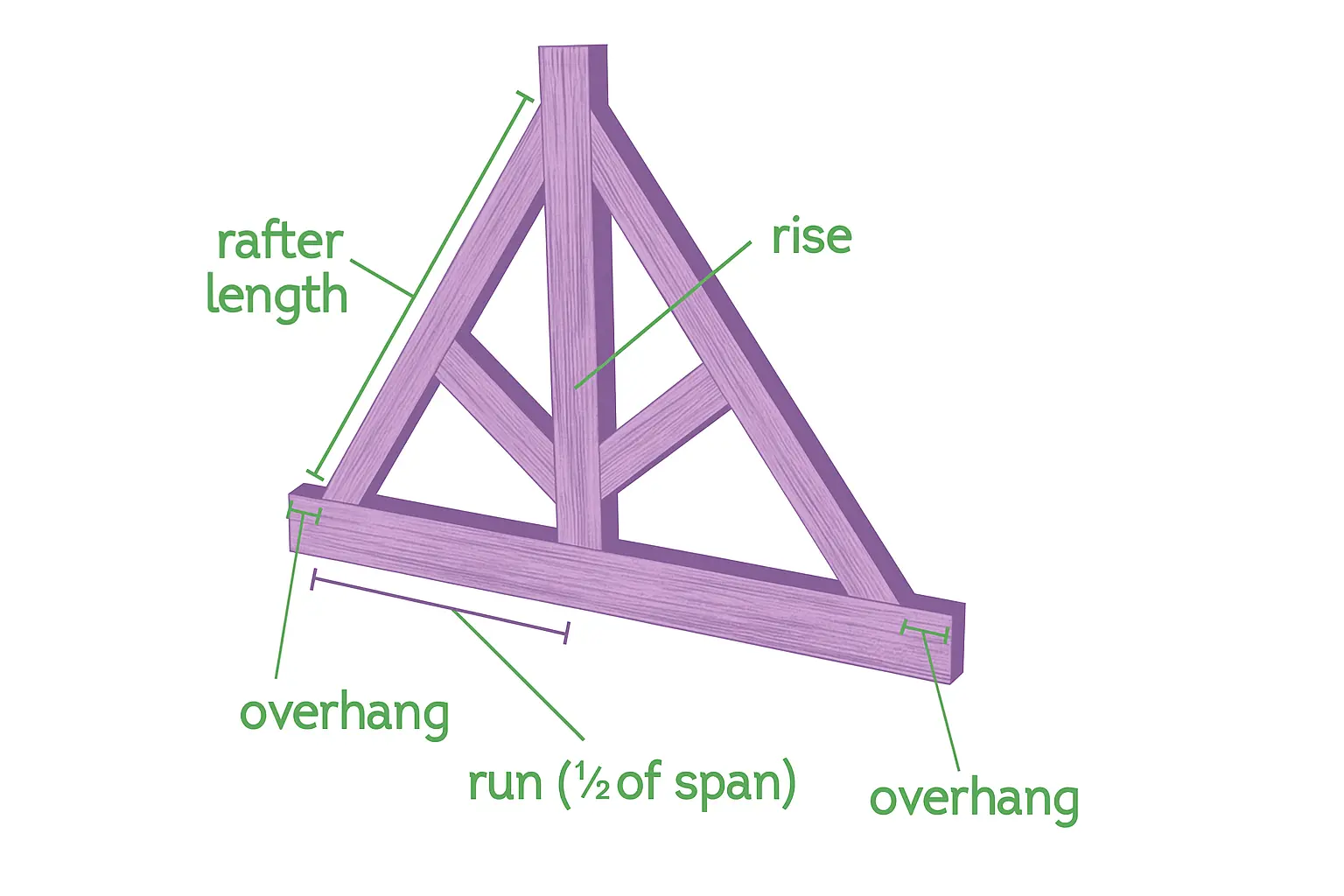
Rafter length is the distance from the outer edge of the wall plate to the center of the roof ridge, measured along the rafter. It's a crucial measurement in roof construction that determines how long your rafters need to be to properly support the roof structure.
Rafters are the sloping beams that support the roof deck and transfer the weight of the roof to the walls. The length of each rafter depends on the roof's span (run), its height (rise), and the pitch of the roof. Getting the rafter length right is essential for structural integrity and proper roof installation.
Common rafter lengths in residential construction range from about 8 feet to 20 feet, depending on the roof span and pitch. Steeper roofs require longer rafters, while shallow roofs need shorter ones. The rafter length calculation ensures your roof will be structurally sound and properly supported.
How is Rafter Length Calculated?
Rafter length is calculated using the Pythagorean theorem, which finds the hypotenuse of a right triangle. Since a rafter forms a right triangle with the rise (vertical height) and run (horizontal distance), we can calculate its length using this formula:
Rafter Length = √(Rise² + Run²)
When you know the roof pitch instead of the rise, you can calculate the rise first. For a roof with a pitch of x:12 (meaning x inches of rise per 12 inches of run), the rise is calculated as:
Rise = (Pitch × Run) / 12
Then you use this rise value in the main rafter length formula. Our calculator handles both methods automatically - you can enter either the rise and run directly, or use the roof pitch (x:12 format) with the run.
It's important to note that this calculates the basic rafter length. In actual construction, you may need to add overhang lengths, account for ridge board thickness, or adjust for birdsmouth cuts depending on your specific design.
What is Truss Count?
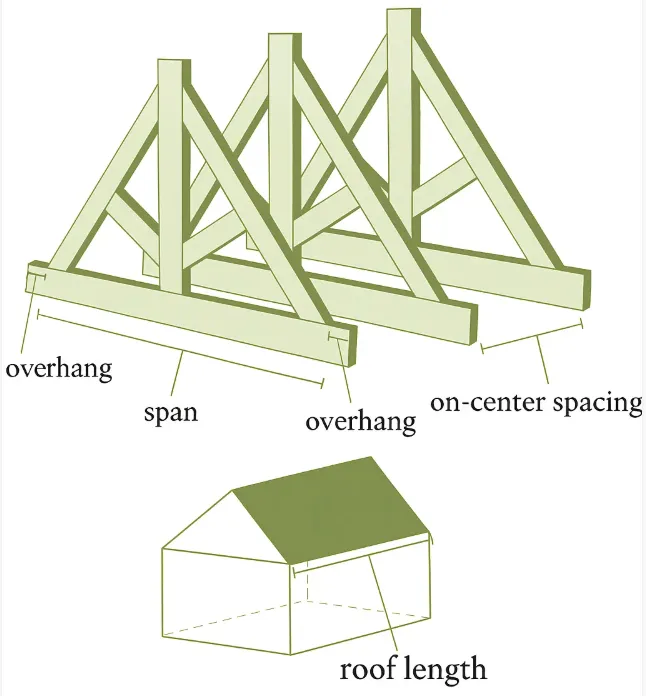
Truss count refers to the number of roof trusses needed to span the entire length of your roof. Roof trusses are prefabricated structural frameworks that support the roof deck, typically installed at regular intervals along the length of the building.
The number of trusses required depends on two main factors: the total roof length and the on-center spacing between trusses. On-center spacing is the distance from the center of one truss to the center of the next truss, typically measured in inches.
Standard on-center spacing for roof trusses is usually 16, 19.2, or 24 inches, with 24 inches being the most common for residential construction. Closer spacing (16 inches) provides more structural support but requires more trusses and increases material costs.
How is Truss Count Calculated?
The truss count calculation is straightforward. You divide the total roof length by the on-center spacing, then add one more truss because you need a truss at both the start and end points of the roof. Here's the formula:
Truss Count = (Roof Length ÷ On-Center Spacing) + 1
For example, if your roof is 40 feet long and you're spacing trusses 24 inches (2 feet) apart: (40 ÷ 2) + 1 = 21 trusses. The result is always rounded up to ensure you have enough trusses to properly support the entire roof span.
When calculating total expenses, multiply the truss count by the cost per truss. If installation costs are included, add the installation cost per truss (or a fixed installation fee) to get the complete project cost.
Remember that local building codes may specify minimum truss spacing requirements, so always check with your local building department before finalizing your truss layout. Our calculator provides accurate counts, but code compliance is your responsibility.
Why Rafter Length Matters
Structural Integrity
Correct rafter length ensures your roof can support the weight of roofing materials, snow loads, and wind forces without sagging or failing.
Material Planning
Knowing exact rafter lengths helps you order the right amount of lumber, minimizing waste and reducing construction costs.
Proper Installation
Accurate measurements prevent installation problems, ensure proper roof pitch, and maintain consistent spacing between rafters.
Code Compliance
Building codes specify minimum rafter dimensions based on span and load requirements. Correct calculations help ensure compliance.
Tips for Accurate Rafter Calculations
Measure Carefully
Always measure your roof span and rise accurately. Small measurement errors can lead to significant problems during installation.
Account for Overhangs
If your roof has overhangs, remember to add the overhang length to your calculated rafter length for complete coverage.
Consider Ridge Board
If using a ridge board, account for its thickness when calculating rafter length. The rafter extends to the center of the ridge board.
Order Extra Material
Always order 5-10% extra lumber to account for cutting waste, mistakes, and future repairs.
Check Local Codes
Verify minimum rafter sizing requirements with your local building department before ordering materials.
Frequently Asked Questions
What's the difference between rafter length and run?
The run is the horizontal distance from the outside of the wall to the center of the ridge, measured at the base of the triangle. The rafter length is the actual length of the rafter board along the slope, which is longer than the run. Run is always shorter than rafter length.
How do I convert roof pitch to rise and run?
Roof pitch in x:12 format means x inches of rise per 12 inches of run. To find the rise for a given run, multiply the run (in feet) by the pitch ratio. For example, a 4:12 pitch with a 10-foot run gives you a rise of (4/12) × 10 = 3.33 feet.
What is standard truss spacing?
Standard truss spacing is typically 24 inches on-center for residential construction. However, 16-inch spacing provides stronger support and may be required for certain roof loads or local building codes. Always check your local building requirements.
Do I need to account for overhangs when calculating truss count?
No, truss count is calculated based on the roof length only, not including overhangs. Overhangs are typically supported by rafter tails that extend beyond the truss ends, so they don't affect the number of trusses needed.
Can I use this calculator for commercial construction?
While the mathematical formulas are correct, commercial construction often has different code requirements, loading specifications, and structural considerations. Always consult with a structural engineer for commercial projects.
What if my roof has different pitches on different sections?
If your roof has multiple sections with different pitches, calculate each section separately. Each section will have different rafter lengths based on its specific rise, run, or pitch measurements.
Embed Rafter Length Calculator
Add our rafter length calculator to your website or blog. Help your visitors calculate rafter lengths using rise and run or roof pitch, and determine the number of trusses needed for their roofing project. Perfect for construction websites, DIY resources, and roofing guides.
Embed Code
Related Calculators
Roof Pitch Calculator
Calculate roof pitch, slope, and rafter length
Birdsmouth Cut Calculator
Calculate birdsmouth cuts for rafters
Gambrel Roof Calculator
Calculate gambrel roof dimensions
DIY Shed Cost Calculator
Calculate shed construction costs
Board Foot Calculator
Calculate lumber volume and costs
All Construction Calculators
Browse all construction tools