

DIY Shed Cost Calculator
Estimate the total cost of building your own shed by entering dimensions, roof specifications, and material costs. Get a detailed breakdown of expenses for your DIY project.
Shed Details
Invalid Input
Please check your input values.
Material Costs
Results
No calculation yet
Enter your shed dimensions and material costs to calculate the total cost.
How Does This Calculator Work?
Our DIY Shed Cost Calculator estimates the total cost of building your shed by calculating the area of each component (floor, walls, and roof) and multiplying by the material costs you specify. The calculator accounts for different roof types and includes additional features like doors and windows.
The calculation uses standard construction formulas to determine the surface areas needed for each part of your shed. For slanted and gable roofs, the calculator uses the Pythagorean theorem to calculate the roof slope area based on the roof rise and overhang you specify.
Key Calculation Formulas
Our calculator uses the following formulas:
- • Floor Area (Af): Af = L × W
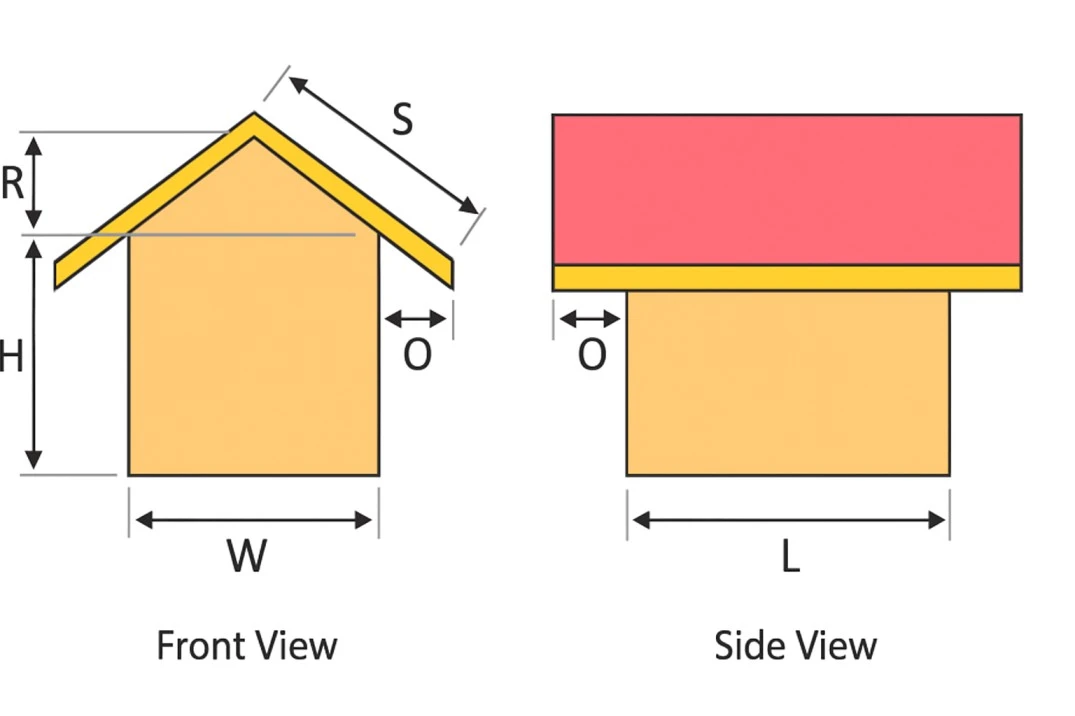
- • Wall Area (Aw): Aw = 2 × (L + W) × H + (W × R × c)
Where c = 1 for slanted and gable roofs, c = 0 for flat roofs - • Rafter Span (S): S = √[ (W + 2×O)² + (c × R × t × (1 + 2×O/W))² ] / t
Where c = 1 for slanted/gable (c = 0 for flat), t = 1 for slanted/flat (t = 2 for gable) - • Roof Area (Ar): Ar = S × t × (L + 2×O) for slanted and gable roofs
For flat roofs: Ar = L × W - • Total Cost: (Floor Area × Floor Cost) + (Wall Area × Wall Cost) + (Roof Area × Roof Cost)
Variables: L = Length, W = Width, H = Wall Height, R = Roof Rise, O = Overhang, S = Rafter Span
Choosing the Right Materials for Your Shed
Selecting the right materials is crucial for both cost-effectiveness and durability. The materials you choose will determine not only your initial investment but also the long-term maintenance requirements and lifespan of your shed.
Flooring Materials
- • Pressure-Treated Plywood: $2-4/sq ft - Most common, rot-resistant
- • OSB (Oriented Strand Board): $1.50-3/sq ft - Budget-friendly option
- • Concrete Slab: $5-8/sq ft - Most durable, requires foundation
- • Gravel Base: $1-2/sq ft - Economical for storage sheds
Wall Materials
- • Plywood Sheathing: $2.50-4/sq ft - Standard choice
- • T1-11 Siding: $3-5/sq ft - Combines sheathing and siding
- • Board and Batten: $4-7/sq ft - Traditional aesthetic
- • Metal Siding: $3-6/sq ft - Low maintenance, modern look
Roofing Materials
- • Asphalt Shingles: $3-5/sq ft - Most popular, 20-30 year lifespan
- • Metal Roofing: $5-10/sq ft - Long-lasting, energy efficient
- • Rubber Membrane: $4-7/sq ft - Great for flat roofs
- • Corrugated Metal: $2-4/sq ft - Budget option, easy installation
Cost-Saving Tips
- • Buy materials in bulk during sales
- • Consider reclaimed materials for non-structural elements
- • Use standard sizes to minimize waste
- • Plan purchases to avoid multiple trips
- • Compare prices at multiple suppliers
Understanding Different Roof Types
The roof type you choose affects both the cost and functionality of your shed. Each roof style has different material requirements, complexity, and aesthetic appeal.
Flat Roof
A completely horizontal roof with no slope. Best for modern designs and minimal water collection areas.
- • Pros: Easiest to build, lower material cost, modern aesthetic
- • Cons: Requires proper drainage, can accumulate snow/water
- • Best for: Dry climates, modern design preferences
- • Material Cost: Typically $3-5 per square foot
Slanted Roof (Single Slope)
A single-sloped roof that slopes in one direction. Simple and effective for water drainage.
- • Pros: Simple construction, good drainage, cost-effective
- • Cons: Less headroom on low side
- • Best for: Lean-to sheds, economical projects
- • Material Cost: Typically $4-6 per square foot
Gable Roof (Double Slope)
A traditional two-sloped roof meeting at a ridge. Classic design with maximum headroom.
- • Pros: Excellent drainage, maximum interior space, traditional look
- • Cons: More complex construction, higher material cost
- • Best for: Traditional designs, sheds needing maximum headroom
- • Material Cost: Typically $4-7 per square foot (more surface area)
Note: The roof rise (vertical distance from wall top to roof peak) affects both the roof area and material requirements. A higher rise increases roof area and cost but provides better drainage and more interior space.
Permits and Building Codes
Before starting your shed project, it's essential to understand local building codes and permit requirements. These regulations vary by location and can significantly impact your project timeline and costs.
When Permits Are Required
- • Sheds over 120-200 sq ft (varies by location)
- • Structures with electrical or plumbing
- • Sheds attached to your home
- • Sheds exceeding height restrictions
- • Structures in certain zoning areas
Permit Costs
- • Basic permit: $50-200
- • Plan review: $100-500
- • Inspection fees: $50-150 per inspection
- • Total typical cost: $200-850
Common Building Code Requirements
- • Setback requirements (distance from property lines)
- • Maximum height restrictions
- • Foundation requirements
- • Wind load requirements (hurricane zones)
- • Snow load requirements (northern climates)
What to Check
- • Contact your local building department
- • Review property line setbacks
- • Check HOA restrictions (if applicable)
- • Verify utility easements
- • Understand inspection requirements
Important: Building without required permits can result in fines, forced removal of the structure, or difficulty selling your property. Always check local regulations before starting construction.
Tips for Reducing Shed Building Costs
Building a shed doesn't have to break the bank. With smart planning and strategic choices, you can significantly reduce your project costs while still creating a durable and functional structure.
Material Savings
- • Buy materials during seasonal sales (spring/fall)
- • Use standard lumber sizes to minimize cutting waste
- • Purchase bulk quantities for better pricing
- • Consider reclaimed materials for non-structural parts
- • Shop around at multiple suppliers
- • Use OSB instead of plywood where appropriate
Design Optimizations
- • Keep dimensions to standard material sizes
- • Choose simple roof designs (flat or single slope)
- • Minimize windows and doors
- • Use pre-hung doors instead of custom builds
- • Plan for standard 4x8 sheet sizes
Construction Savings
- • Do the work yourself (DIY labor savings)
- • Borrow or rent tools instead of buying
- • Use a simple foundation (gravel or concrete blocks)
- • Skip expensive finishes initially
- • Build in phases (foundation first, then structure)
- • Use screws instead of nails for easier disassembly
Long-Term Savings
- • Invest in quality materials for durability
- • Proper waterproofing prevents future repairs
- • Good ventilation reduces moisture damage
- • Regular maintenance extends lifespan
- • Energy-efficient design reduces heating costs
Frequently Asked Questions
How accurate is this DIY shed cost calculator?
Our calculator provides accurate estimates based on the dimensions and material costs you enter. However, actual costs can vary based on local material prices, labor costs (if hiring help), and additional expenses like permits, tools, and foundation work. Use this as a starting point for budgeting, but get local quotes for final planning.
What material costs should I use?
Material costs vary by location and quality. Check prices at local hardware stores, lumber yards, and home improvement centers. Typical ranges are: flooring $2-4/sq ft, walls $2.50-5/sq ft, and roofing $3-7/sq ft. Our calculator allows you to input your specific costs for the most accurate estimate.
Do I need a permit to build a shed?
Permit requirements vary by location. Generally, sheds under 120-200 square feet may not require permits, but this depends on your local building codes. Contact your local building department to confirm requirements. Even if not required, obtaining a permit ensures your structure meets safety standards.
What's the difference between flat, slanted, and gable roofs?
A flat roof is horizontal with no slope. A slanted (single-slope) roof slopes in one direction. A gable roof has two slopes meeting at a ridge. Gable roofs provide the most interior space and best drainage but cost more due to increased surface area. Flat roofs are simplest but require careful drainage planning.
How do I calculate roof area for different roof types?
For flat roofs, the area equals length × width. For slanted roofs, we use the Pythagorean theorem: √((width + 2×overhang)² + roof rise²) × length. For gable roofs, we calculate one slope and multiply by 2: 2 × √((width/2 + overhang)² + roof rise²) × length. Our calculator handles these calculations automatically.
What additional costs should I consider?
Beyond materials, consider: foundation materials (gravel, concrete, or blocks), hardware (screws, nails, hinges, latches), tools (if you don't own them), paint or stain, permits, delivery fees, and waste disposal. You can add these to the "Additional Costs" field in the calculator.
Can I build a shed for under $500?
Yes, it's possible to build a small shed (8×8 feet or smaller) for under $500 if you use basic materials, do all the work yourself, use a simple foundation (gravel or blocks), and choose a flat or single-slope roof. However, costs quickly increase with size, quality materials, and additional features like windows and doors.
Embed DIY Shed Cost Calculator
Add our DIY Shed Cost Calculator to your website or blog. Help your visitors estimate the cost of building their own shed with accurate calculations and detailed cost breakdowns.