

SAG Calculator
Calculate the sagitta (SAG) of a circle segment using radius of curvature and diameter. Essential for designing suspension systems, architectural arches, and optical applications.
Missing Required Information
Please complete all required fields to calculate.
Result
No calculation yet
Enter the radius of curvature and diameter to calculate the sagitta (SAG).
What is SAG?
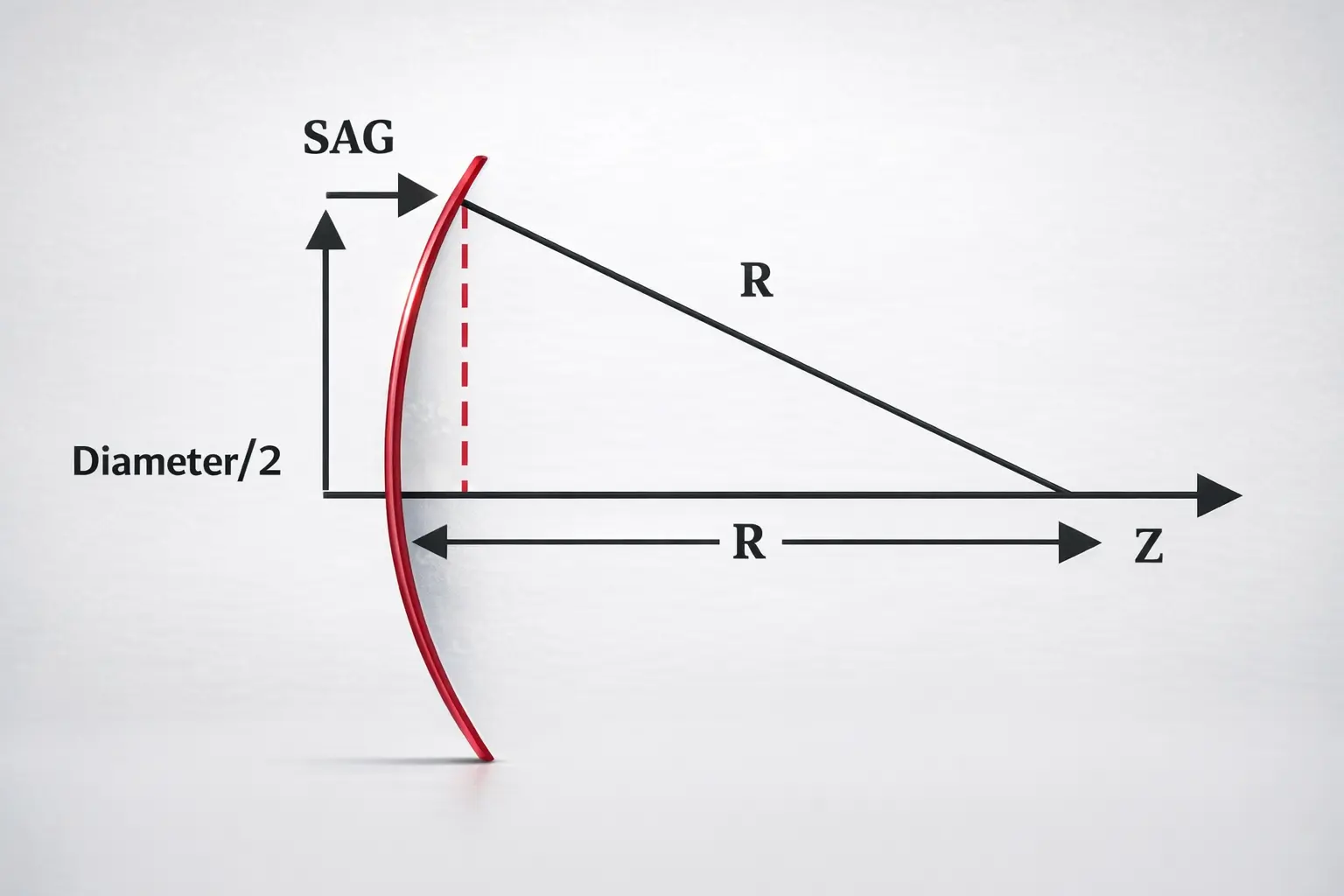
SAG, short for sagitta, refers to the depth or drop of a curved line. In simple terms, it measures how far the arc curves away from a straight line connecting its endpoints. It's a fundamental measurement in geometry that describes the curvature of a circle segment. The sagitta is the perpendicular distance from the midpoint of a chord to the arc itself.
This measurement is crucial in various fields, from designing suspension systems for vehicles to crafting elegant architectural arches. In optics, sagitta helps determine the curvature of lenses and mirrors. In construction, it's essential for designing arches, domes, and curved structural elements. By understanding SAG, you can better appreciate how curvature impacts both performance and aesthetics.
The sagitta is always less than or equal to the radius of curvature. When the diameter equals twice the radius, the sagitta equals the radius itself, representing a semicircle. For smaller diameters relative to the radius, the sagitta becomes proportionally smaller, creating a shallower arc.
How to Calculate SAG
Calculating the sagitta is straightforward when you know the radius of curvature and the diameter (chord length) of the circle segment. The formula uses basic geometry principles to determine how deep the arc curves.
SAG Formula
The sagitta (SAG) is calculated using:
Where:
- • R = Radius of curvature
- • d = Diameter (chord length)
Step-by-Step Calculation Example
Let's calculate the SAG for a circle segment with:
- • Radius of curvature (R): 10 feet
- • Diameter (d): 13 feet
Step 1: Calculate the radius squared
R² = 10² = 100
Step 2: Calculate half the diameter squared
(d/2)² = (13/2)² = 6.5² = 42.25
Step 3: Subtract and find the square root
√(R² - (d/2)²) = √(100 - 42.25) = √57.75 ≈ 7.599
Step 4: Calculate the SAG
SAG = R - √(R² - (d/2)²) = 10 - 7.599 = 2.401 feet
This means the arc drops approximately 2.4 feet from the chord connecting the endpoints, creating a noticeable curve in the structure.
Applications of SAG
Understanding and accurately calculating sagitta is essential across multiple industries and applications. The measurement helps engineers, architects, and designers create structures and systems that function optimally while maintaining aesthetic appeal.
Suspension Systems
In vehicle suspension systems, proper sag ensures that the suspension operates within its optimal range. This balance helps maintain consistent wheel contact with the road, improving traction, ride comfort, and overall handling. Motorcycle and bicycle suspension tuning relies heavily on accurate sag measurements.
Optical Design
In optics, sagitta is critical for designing lenses and mirrors. The curvature of optical surfaces directly affects how light is focused or reflected. Precise sagitta calculations ensure that optical systems perform as intended, whether in cameras, telescopes, or laser systems.
Architectural Arches
Architectural arches require precise sagitta calculations to ensure both structural integrity and aesthetic appeal. The depth of the arch affects load distribution and visual impact. From Roman aqueducts to modern bridges, accurate sagitta measurements are fundamental to arch design.
Cable and Wire Systems
In overhead power lines, suspension bridges, and cable systems, sagitta determines the natural curve of cables under their own weight and loads. Proper sag ensures cables don't break under tension while maintaining safe clearances from the ground or other structures.
Factors Affecting SAG
Several key factors influence the sagitta of a circle segment. Understanding these relationships helps you predict how changes in design parameters will affect the final curvature.
Radius of Curvature
The radius of curvature (R) is the primary factor determining sagitta. For a given diameter, a larger radius creates a shallower arc with a smaller sagitta. Conversely, a smaller radius produces a deeper, more pronounced curve.
Example: With a 10-foot diameter, a 20-foot radius produces a sagitta of approximately 0.65 feet, while a 10-foot radius produces a sagitta of 2.5 feet. That's nearly four times deeper.
Diameter (Chord Length)
The diameter or chord length directly affects sagitta. For a fixed radius, increasing the diameter increases the sagitta. However, the diameter cannot exceed twice the radius. When it does, you have a complete semicircle.
Example: With a 10-foot radius, a 5-foot diameter produces a sagitta of about 0.32 feet, while a 15-foot diameter produces a sagitta of approximately 3.4 feet.
Mathematical Relationship
The relationship between radius, diameter, and sagitta follows a non-linear curve. As the diameter approaches 2R (the maximum possible), the sagitta approaches R. For small diameters relative to the radius, the sagitta is approximately d²/(8R), which is useful for quick estimates.
Frequently Asked Questions
How do I calculate SAG using the SAG formula?
You can calculate SAG in three steps: First, determine the radius of curvature (R). Next, compute the diameter (d). Finally, apply the SAG formula: SAG = R - √(R² - (d/2)²). Our calculator automates this process for you, ensuring accurate results every time.
What is the SAG for a 5m radius of curvature and 10m diameter?
The SAG will be 5 meters. When the diameter equals twice the radius (d = 2R), the arc forms a complete semicircle, and the sagitta equals the radius. This represents the maximum possible sagitta for a given radius.
What factors affect the sag of a suspension system?
Several factors influence sag in suspension systems, including the spring rate, preload settings, the weight of the rider and any additional load, and the overall design of the suspension. Environmental conditions and wear over time can also impact sag performance. Proper sag adjustment is crucial for optimal suspension function.
How does proper sag adjustment impact ride quality and safety?
Correct sag adjustment helps ensure that your suspension can absorb bumps effectively, maintain stability, and provide predictable handling. This not only enhances ride comfort but also contributes to safer vehicle dynamics by preventing issues like bottoming out or excessive rebound. Proper sag ensures the suspension operates in its optimal range throughout the ride.
Can the diameter be larger than twice the radius?
No, the diameter cannot exceed twice the radius. If you enter a diameter greater than 2R, the calculator will show a validation error. This is because a chord cannot be longer than the diameter of the circle, which is 2R. The maximum possible diameter is 2R, which creates a semicircle with SAG = R.
What units can I use with the SAG calculator?
Our calculator supports multiple unit systems including millimeters (mm), centimeters (cm), meters (m), inches (in), feet (ft), and yards (yd). The default units are in US format (feet), but you can easily switch to metric or other units as needed. All units are automatically converted for consistent calculations.
Embed SAG Calculator
Add our SAG calculator to your website or blog. Help your visitors calculate sagitta for curved structures, suspension systems, and optical applications. Perfect for engineering websites, construction blogs, and educational resources.
Embed Code
Related Calculators
Rolling Offset Calculator
Calculate pipe rolling offset travel, run, and true offset for plumbing and piping projects.
Rafter Length Calculator
Calculate rafter lengths accurately for roof construction projects.
Roof Pitch Calculator
Calculate roof pitch, slope, and rafter length for construction projects.